Basic Tool Kit for Car Maintenance: What a Beginner Needs
Posted by DIYCar Editorial Team Reviewed by DIYCar Editorial Team Review date Posted Topic: Oil and Basics
A beginner's car maintenance kit starts with three things that cost little: your owner's manual, a tire pressure gauge and a flashlight. Add a socket set, a torque wrench, jack stands, a drain pan and eye protection and gloves as you take on oil changes and similar jobs. Buy tools for a job when you are ready to do it.
Section of: Car Maintenance Checklist: What to Check and When
You do not need a full garage to start. A few inexpensive items cover the checks in the by-system checklist, and you add tools as you take on bigger jobs. This page also says what to skip. Before you buy anything, read safety rules for DIY work.
Start with the manual, a tire gauge and a flashlight
Your owner’s manual is the first tool. It holds the specifications, the torque values and the jack points, and every guide here defers to it. Keep it in the car or bookmark the maker’s online copy.
A tire pressure gauge is the cheapest useful tool. The proper pressure is usually on a door jamb or glove box sticker and in the owner’s manual; do not use the maximum printed on the tire’s sidewall, says the Department of Energy. Add a flashlight for reading dipsticks and looking at fluid levels.
Hand tools
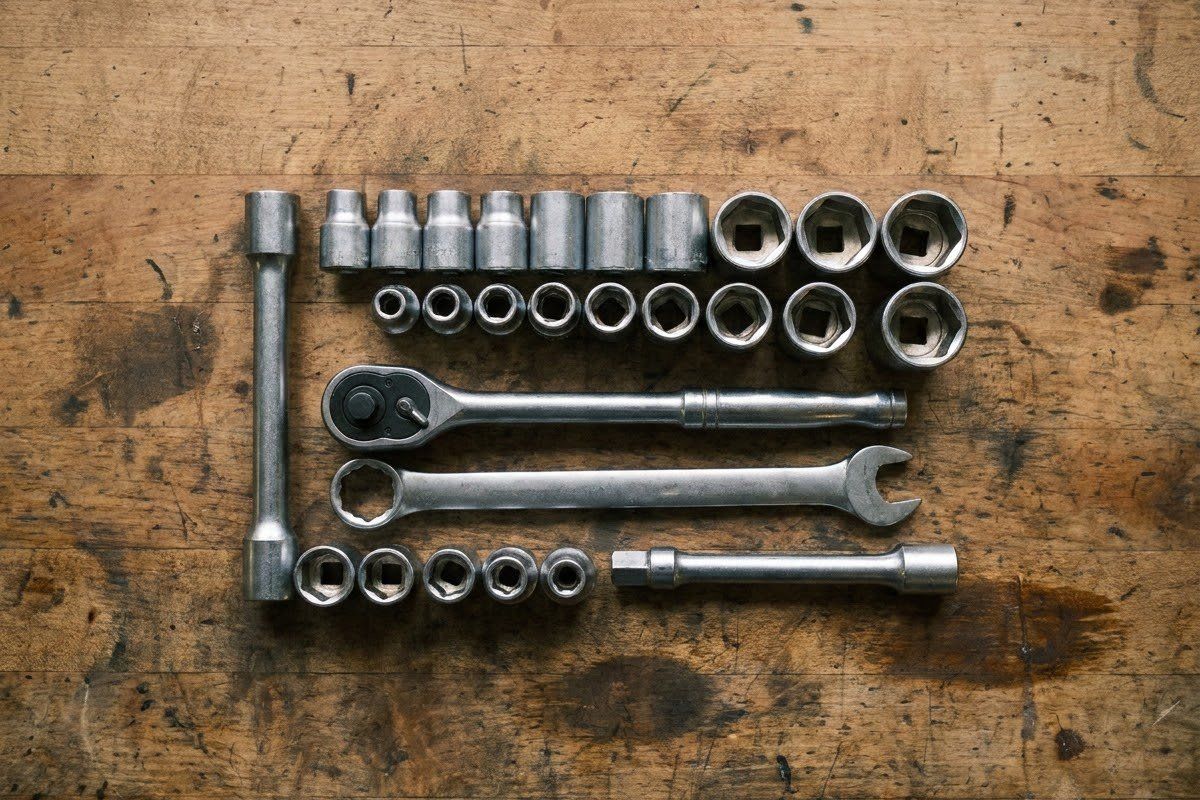
- Socket set with a ratchet, in the sizes your car uses. Check the guide for the job.
- Combination wrenches for places a socket does not fit.
- Screwdrivers (flat and Phillips), and pliers.
- Torque wrench. Where your manual gives a torque, this is how you meet it. See the step-by-step oil change guide for the drain plug.
- Oil filter wrench that fits your filter.
- Drain pan and funnel, and a sealable container for used oil, as EPA advises.
Lifting and support
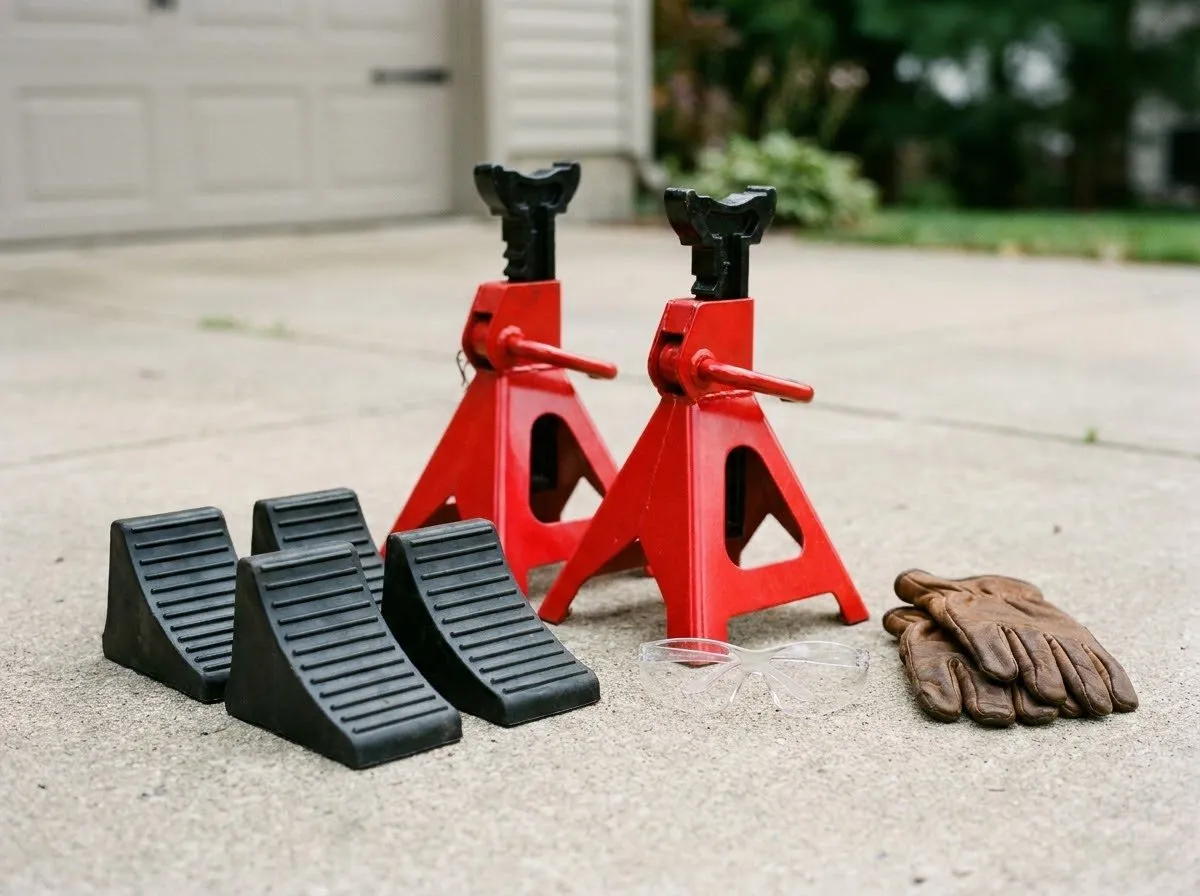
If you need to raise the car, you need jack stands or ramps in addition to a jack, because a jack alone is not safe to work under. One maker’s manual says to use vehicle support stands and not to get under a vehicle supported only by a jack. See how to jack up a car safely. Wheel chocks are the other basic item.
Safety gear
At minimum: eye protection and gloves, and a fire extinguisher you know how to use if you work in a garage. OSHA’s examples of personal protective equipment include gloves, safety glasses and shoes, earplugs or muffs, hard hats, respirators and coveralls. Add shop rags and a pair of old clothes.
What to buy later
As you take on specific jobs, add what they need: a spark plug socket, a battery terminal brush, a coolant funnel, a brake caliper tool, a code reader. Each of those has its own guide, and buying for the job keeps the kit small.
What you do not need
- A huge “mechanic’s set” with tools you will not use.
- Air tools and lifts for your first jobs.
- Tools for work your manual says needs special equipment or software; hand those to a shop.
Next, see the oil change interval to plan your first job, and use the start here page if you are new to the site.
Quick answers
Do I need a torque wrench?
For any fastener where your manual gives a torque value, yes: a torque wrench is how you meet that value instead of guessing. An under-tightened drain plug can leak and an over-tightened one can strip its threads. A basic click-type wrench that covers the range in your manual is enough to start. Read the wrench's instructions, and if the manual gives no value, ask a shop.
What size socket set should I buy?
Look at your own car first. Fastener sizes vary by maker and model, and the sizes you need for an oil change on your car may differ from another. A mixed metric and inch set in a common drive size covers many jobs. Check the sizes the guide or manual lists for the job, and buy a missing socket as you need it.
What is the first tool I should buy?
A tire pressure gauge. It costs little, takes a minute, and is how you check the number in your manual or on the door-jamb sticker. DOE says that proper tire pressure can improve gas mileage and that you should not use the maximum pressure printed on the tire's sidewall. Keep it in the car.
Do I need jack stands for an oil change?
If you need to raise the car to reach the drain plug, yes, or use ramps. The manual we cite says to use vehicle support stands and not to get under a vehicle supported only by a jack. If you can reach the plug without lifting, you do not, but check your manual for what it recommends.
Can I use any container for used oil?
Use a leak-proof container you can seal. EPA advises placing used oil in a leak-proof can or container. A clean, sealable plastic jug with a screw cap is the usual choice. Label it, keep it upright, and take it to a collection site; ask local auto maintenance shops, waste collectors or government waste officials where to drop it off.
Where we got this
- U.S. DOE: Maintain Your Car (fueleconomy.gov) (fueleconomy.gov)
- Kia Owner's Manual: Jacking instructions (ownersmanual.kia.com)
- OSHA: Personal Protective Equipment (osha.gov)
- EPA: Managing, Reusing, and Recycling Used Oil (epa.gov)
Further guides
- Car Maintenance Checklist: What to Check and When
A car maintenance checklist by system: what to check regularly, which jobs follow your manual's schedule, and which are safe for beginners to do.
- DIY Car Safety: The Rules Before You Touch Anything
DIY car safety rules for beginners: supporting the car, hot fluids, batteries, carbon monoxide, PPE, disposal, and when to stop and call a shop.
- How to Change Oil in a Car: Step-by-Step for Beginners
How to change your own engine oil safely: the manual-first checks, the order of the job, used-oil disposal and when to hand the car to a shop.
- How Many Quarts of Oil Does My Car Need?
How many quarts of oil your car takes is listed in the owner's manual for your exact engine. Where to find it, and how to fill and check the level.
- How Often to Change Oil: What the Manual Says and Why
How often to change oil depends on your owner's manual, your driving conditions and the oil used. See normal vs severe schedules and what to check.
- How Often to Change Synthetic Oil (and What Changes vs Conventional)
How often to change synthetic oil is set by your owner's manual, not the label on the bottle. See what the oil type changes and what it does not.