Brake Pad Thickness: How to Check It and the Minimum
Posted by DIYCar Editorial Team Reviewed by DIYCar Editorial Team Review date Posted Topic: Tires and brakes
The minimum brake pad thickness for your car is set by the vehicle or pad maker and is in the service information, so check your manual. As a visual guide, Wagner says pads that look thinner than about 1/4 inch may be due for replacement, and a wear-indicator slot that is gone or barely visible means they are due. Never drive on pads you suspect are worn through.
Section of: Brake Pads Explained: Types, Wear Signs and When to Replace
Brake pad thickness is how much friction material is left before the metal backing plate. The number that counts is the one for your vehicle, in its service information. This page, part of the brake pads guide, shows how to look at the pads, what a pad maker says about when to replace them and what to do at the limit. For the job, see how to replace brake pads.
Short answer: the maker’s minimum
Use the minimum in your vehicle’s service information or on the pad maker’s data. As a rough visual guide, Wagner says pads that look thinner than about 1/4 inch may be due for replacement. That is a prompt to plan a replacement, not the legal or engineering limit for your car. Commonly published minimums vary and we do not state one as universal.
How to look without removing the wheel
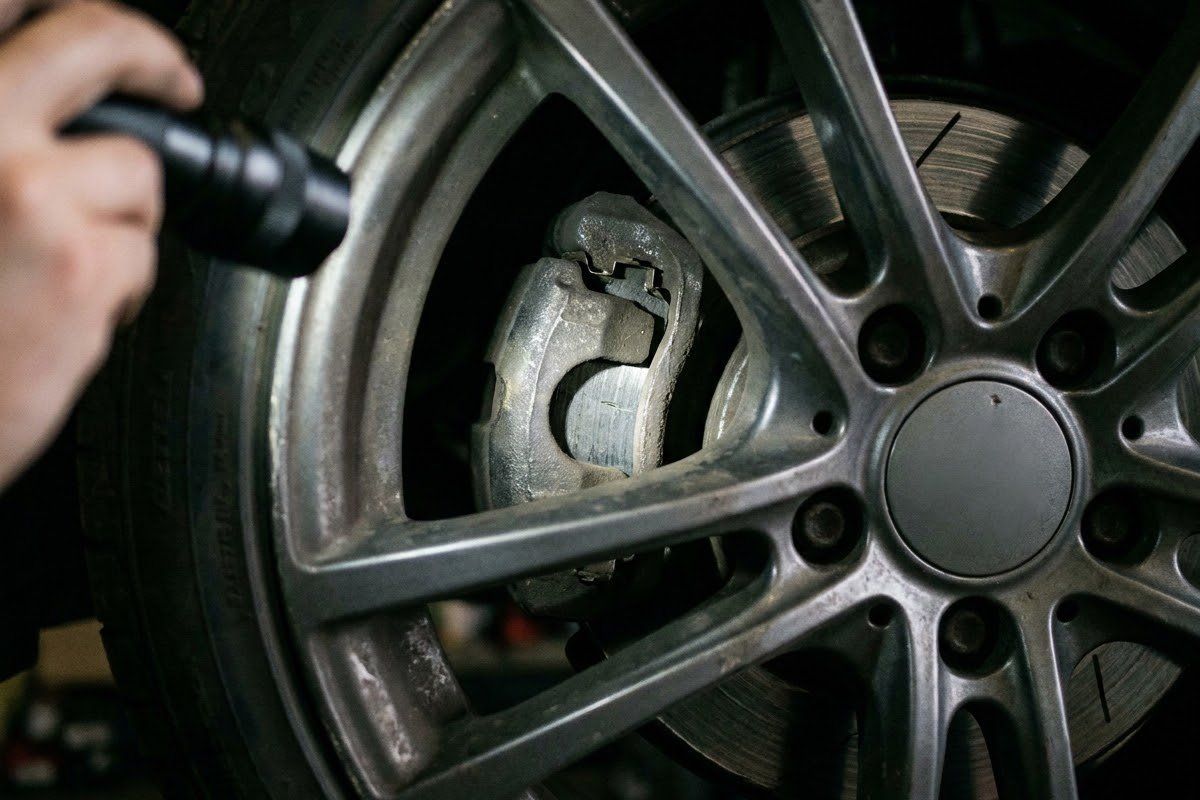
Wagner says that on many vehicles you can see the pad through the holes in the wheel, and a flashlight may help. Let the brakes cool for at least an hour before you look, because a short drive can make them very hot. Look at the pad’s visible edge and at the wear-indicator slot. If the slot is gone or barely visible, Wagner says it is time for new pads.
Measure with a gauge
A pad gauge or a small ruler gives a number you can compare with your manual’s limit; check the specification for what is measured. Measure each pad you can see. This needs the wheel off for a full view, which means lifting the car safely; follow the jack safety guide and the beginner safety rules. Wagner notes that with the wheel off you can also see the caliper, rotor and brake lines.
Wear indicators and electronic sensors
Some pads have a slot that disappears as they wear. Some vehicles squeal to warn the driver, according to Wagner, and some trigger a dashboard warning light when pads reach a minimum level. These are warnings, not a replacement for inspection: a pad can be near its limit without having alerted you yet.
What to do at the limit
Plan the replacement now. Do not wait for grinding; Wagner says grinding or growling typically means the pads have worn through, and the brake system should be examined. Check the rotors too: Wagner says to inspect rotors for run-out, parallelism and minimum thickness specification and to replace any that fall outside it. Wagner also says to check the brake fluid, since very dark fluid might need replacing. If the pedal is soft or you hear grinding, stop driving and call a shop.
Quick answers
How many millimeters are new brake pads?
We do not give a figure because new pad thickness differs between pad designs and vehicles, and we have no primary source that applies to every car. Look up the pad specification for your vehicle or ask the shop to measure and record the thickness. A measurement taken on the same car over time tells you more than a general number.
Can I drive on thin brake pads?
It is not safe to wait. Wagner says a pad that looks under about 1/4 inch may be due for replacement and that a missing wear slot means new pads are due. Grinding typically means the pads have worn through. Get thin pads replaced promptly, and stop driving and call a shop if you hear grinding.
What is the minimum thickness of a brake pad?
The minimum is a vehicle-specific figure from the vehicle or pad maker, found in service information. Commonly quoted figures vary between sources, and we do not state one as universal. Wagner's guide to when pads may be due is about 1/4 inch of visible pad. Use your manual's wear limit for the real decision.
Do I measure the pad or the pad plus its backing plate?
Follow the specification for your vehicle, which says what is measured. Wagner's page gives its 1/4 inch figure as how thick the pad looks, not a measurement method. If you are unsure, take a photo of the pad and ask a shop to measure it.
Do both pads on a wheel wear the same?
Do not assume they do. Measure every pad you can see, not just the easiest one, and compare each reading with your manual's limit. If readings differ a lot or something looks wrong, ask a shop to inspect the brakes.
Where we got this
- Wagner Brake: How to check brake pads (wagnerbrake.com)
- Wagner Brake: Disc brake service (wagnerbrake.com)
Further guides
- Brake Pads Explained: Types, Wear Signs and When to Replace
What brake pads do, the wear signs to watch (squeal, grinding, thin pads), ceramic vs semi-metallic types and when to see a shop instead of DIY.
- How Often to Rotate Tires, and Why It Matters
How often to rotate tires: follow your owner's manual, with Michelin's 5,000 to 7,000 mile guide as a fallback. Patterns by drivetrain and exceptions.
- How to Replace Brake Pads: What the Job Involves and When to Call a Shop
What replacing brake pads involves, tools, a step-by-step overview, bed-in, low-speed testing and a clear list of when to leave the job to a shop.
- How to Rotate Tires at Home Safely
How to rotate tires at home: loosen lug nuts on the ground, lift and support the car on jack stands, swap by your pattern and torque to the manual's value.