Check Engine Light: What It Means and What to Do First
Posted by DIYCar Editorial Team Reviewed by DIYCar Editorial Team Review date Posted Topic: Check engine light
The check engine light, formally the malfunction indicator lamp, comes on when the car's onboard diagnostic computer stores a fault code in the engine or emissions systems. A steady light means get the car checked soon; a flashing light is more urgent and usually signals a serious engine misfire. Read the code, check the gas cap, and follow your owner's manual.
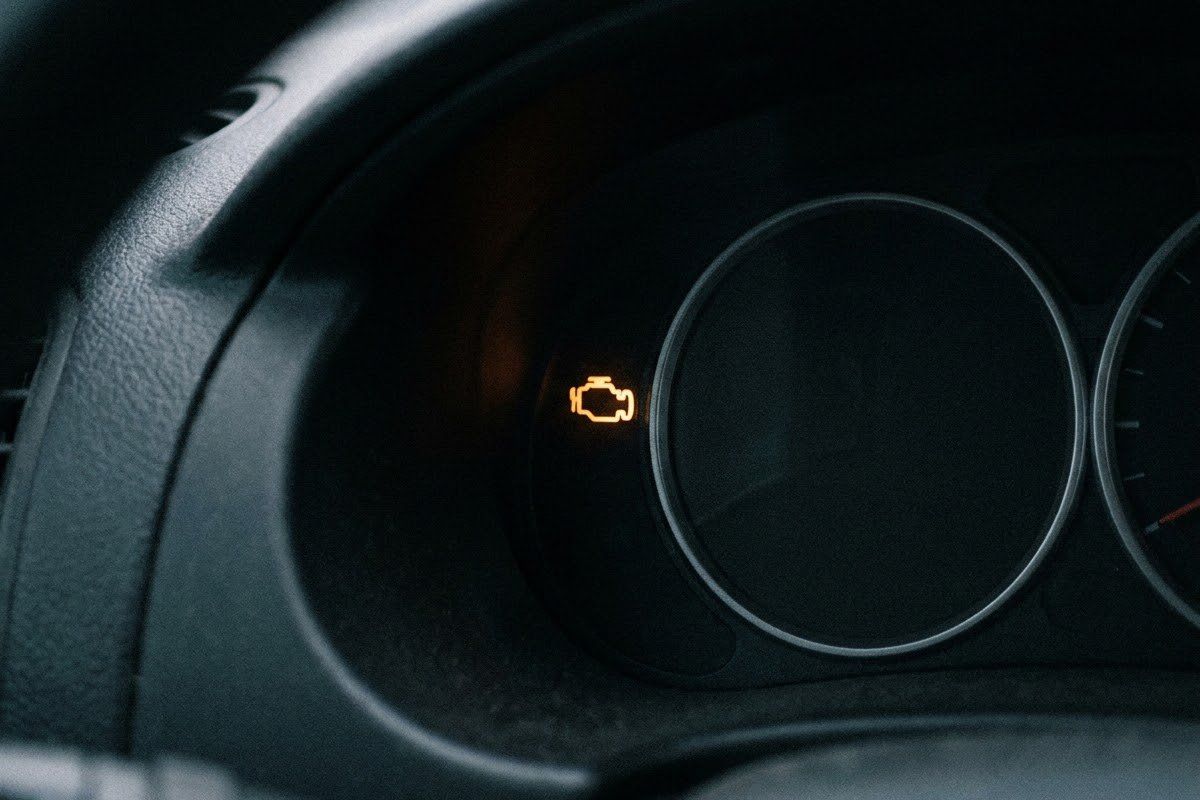
The check engine light is a warning from your car’s onboard diagnostic computer, and it can mean anything from a loose gas cap to a serious engine problem. This guide explains what it means and what to do first. For the urgent case, read flashing check engine light. To find out what triggered it, see how to read check engine light codes and why the light comes on.
Short answer: a warning from the engine computer
The check engine light, formally the malfunction indicator lamp, means the car’s computer has stored a fault code. EPA says the light is usually yellow, may read Service Engine Soon or Check Engine or show an engine symbol, and means the system has stored a fault code that a technician can read. The fueleconomy.gov maintenance page says the light indicates something is wrong with your engine, that the cause can be minor, such as a loose gas cap, or more serious, and that leaving a problem unresolved could reduce fuel economy, increase emissions or lead to costly repairs later; it recommends having a mechanic inspect the car.
The system is called OBD-II. SAE J1979 defines the emissions-related diagnostic services used to communicate between a vehicle’s OBD systems and test equipment, and SAE J2012 defines the standardized trouble codes. EPA says the OBD system monitors up to 11 emission-control subsystems.
Solid versus flashing: how serious each is
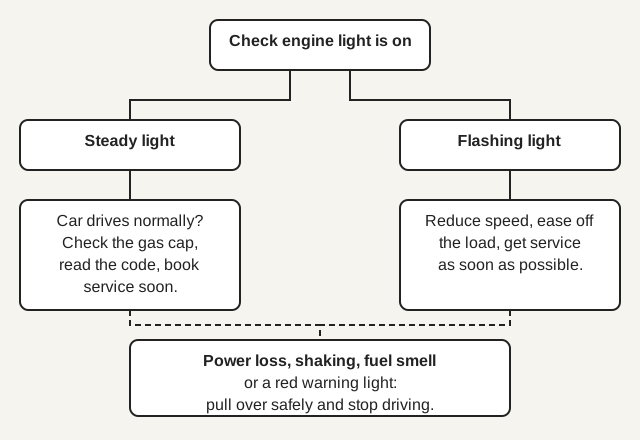
A steady light means schedule service soon. A flashing light is more urgent. EPA says a flashing light indicates a rather severe level of engine misfire and tells drivers to reduce speed and get service as soon as possible, because a severe misfire, even over a short time, can seriously damage components such as the catalytic converter.
| What you see | What it generally means | What to do |
|---|---|---|
| Steady light, car drives normally | A fault code is stored; EPA says the light is a need for service, not a need to stop | Check the gas cap, read the code, get it checked promptly |
| Flashing light | Per EPA, a rather severe misfire | Reduce speed, avoid heavy load, get service as soon as possible |
| Light plus power loss, shaking, fuel smell, or a red warning | Possible serious problem | Pull over safely, stop driving, call for help |
First five checks
Run these checks in order. Each is safe to do in a parking space with the engine off.
- Gas cap. EPA says a loose gas cap can cause a vapor leak that turns the light on. Tighten it fully; the light should go out within a few days.
- How the car feels. Note rough running, loss of power, shaking, noises, smells or smoke.
- Other lights. Oil pressure, temperature and battery warnings are separate and may be more urgent. Check your owner’s manual.
- Recent service. Note any recent fuel-up, repair or work that could have left a connector loose.
- Read the code. A code points to the system involved. See how to read check engine light codes and the OBD-II code lookup tool.
Can I keep driving?
For a steady light with normal driving, EPA says the light is intended to tell you service is needed, not that you must stop, so get it checked promptly. Use a conservative rule: if the light is flashing, or the car loses power, runs very roughly, smells of fuel, overheats or shows a red warning, reduce speed and stop when it is safe. With a flashing light, the safest course is to stop and call for a tow or roadside help; this is our caution, not an EPA instruction.
Common causes
The cause is whatever the code points to, not the light itself. See why the check engine light is on for a list of typical causes, and bad spark plug symptoms if misfires are suspected.
Emissions testing
Many areas test emissions. EPA’s inspection guidance describes failing a vehicle when diagnostic trouble codes are present and the light is commanded on, and state programs vary. Fix the cause first; clearing codes only resets the system, as explained in how to reset the check engine light.
When to see a shop
Use a shop if the light is flashing, the car loses power, the code points to a system you cannot safely work on (fuel, brakes, airbags, hybrid high voltage), a fastener is stripped or seized, or the light returns after a repair. A technician can read the code and diagnose the cause. For safe habits on any job see jack, PPE and ventilation rules. This guide is for gasoline passenger cars; diesel differs, so see your manual.
All Check Engine Light guides
- Flashing Check Engine Light: What It Means and What to Do
A flashing check engine light signals a severe misfire that can damage the catalytic converter. What to do now, likely causes and what to avoid.
- How to Read Check Engine Light Codes at Home
How to read check engine light codes: what an OBD-II code is, how a code reader connects, how to write down the code, and what to do with it next.
- How to Reset the Check Engine Light (and When You Should Not)
Reset the check engine light the right way: fix the cause first, and why clearing codes or disconnecting the battery can fail an emissions inspection.
- Why Is My Check Engine Light On? Common Causes Explained
Why your check engine light is on: gas cap and vapor leaks, misfires, sensors and the catalytic converter, and why the code, not the light, names the cause
Quick answers
Is it safe to drive with the check engine light on?
If the light is steady and the car drives normally, EPA says the light is meant to signal a need for service, not a need to stop. Get it checked promptly. If the light is flashing, or the car loses power, shakes, smells of fuel or shows other warnings such as low oil pressure or high temperature, reduce speed and stop driving when it is safe.
Will it pass inspection with the light on?
Usually not. EPA's inspection guidance describes failing a vehicle when diagnostic trouble codes are present and the light is commanded on, and state programs set their own rules. Fix the cause before the test. Clearing the codes right before an inspection can also leave the car's self-tests not ready, as our page on resetting the light explains.
Does the light come on for an oil change?
The check engine light is the engine and emissions warning, per EPA. A maintenance reminder for an oil change is a different indicator that your owner's manual describes, so do not assume one means the other. If your car has a separate service light, the manual explains how it works and how to reset it. A low oil pressure warning is more urgent.
Can a loose gas cap trigger the light?
Yes. EPA says a loose gas cap can cause a vapor leak that the system detects and that turns the light on. After you tighten the cap properly, EPA says the dashboard light should go out within a few days. If it stays on, the cause is probably something else, so have the code read.
Can the light turn off by itself?
Yes. EPA says the light can turn off on its own once the system no longer detects the problem over several consecutive checks, or a technician can turn it off after a repair. A light that goes out does not mean the stored history is gone or that the cause was fixed, so still check the code if you can.
How is the check engine light different from other warning lights?
The check engine light covers the engine and emissions control system. Oil pressure, battery, temperature and brake lights are separate warnings with their own meanings, which your owner's manual lists. Treat any red warning light as urgent, and use the manual's warning-light chapter to identify each symbol before you drive further.
Where we got this
- EPA: Frequently Asked Questions About On-Board Diagnostics (nepis.epa.gov)
- EPA: Performing Onboard Diagnostic System Checks as Part of a Vehicle Inspection and Maintenance Program (nepis.epa.gov)
- U.S. DOE: fueleconomy.gov, Keeping Your Car in Shape (fueleconomy.gov)
- SAE International: J1979 E/E Diagnostic Test Modes (saemobilus.sae.org)
- SAE International: J2012 Diagnostic Trouble Code Definitions (saemobilus.sae.org)
Further guides
- Flashing Check Engine Light: What It Means and What to Do
A flashing check engine light signals a severe misfire that can damage the catalytic converter. What to do now, likely causes and what to avoid.
- How to Read Check Engine Light Codes at Home
How to read check engine light codes: what an OBD-II code is, how a code reader connects, how to write down the code, and what to do with it next.
- How to Reset the Check Engine Light (and When You Should Not)
Reset the check engine light the right way: fix the cause first, and why clearing codes or disconnecting the battery can fail an emissions inspection.
- Why Is My Check Engine Light On? Common Causes Explained
Why your check engine light is on: gas cap and vapor leaks, misfires, sensors and the catalytic converter, and why the code, not the light, names the cause