How to Flush a Car's Coolant: Step by Step
Posted by DIYCar Editorial Team Reviewed by DIYCar Editorial Team Review date Posted Topic: Coolant
To flush a car's coolant, work only on a cool engine, follow your owner's manual for the drain and refill procedure, and refill with the coolant type it specifies, mixed as the manual and label direct. Catch the old coolant and dispose of it as household hazardous waste. Hybrids and cars with special bleeding steps belong at a shop.
Section of: Engine Coolant (Antifreeze) Guide: Types, Colors, Safety
A coolant flush is a manageable job for some cars, but the details come from your owner’s manual. This guide is the overview; start with the engine coolant guide for what coolant is, and read coolant types and colors before you buy.
Do you need a flush? Follow the manual interval
Flush when your owner’s manual says to. The manual gives the interval and the coolant specification for your car, and we do not give a universal number. If you do not have the manual, a shop can look up the interval for your vehicle.
Safety: cool engine, scald and poison warnings
Work only on a cool engine. One automaker’s owner’s manual says never to remove the radiator cap while the engine is operating or hot, because scalding coolant and steam may blow out under pressure and cause serious injury; even with the engine off, it says not to remove the cap or drain plug while the engine and radiator are hot. Wear eye protection and gloves, and keep children and pets away. ATSDR says antifreeze is a sweet-tasting, brightly colored liquid, that accidental ingestion can occur, and that swallowing larger amounts of ethylene glycol can cause serious illness or death; it says to seek medical attention as soon as possible if ingestion is known or suspected.
If the car is raised for access, use jack stands or ramps rated for the vehicle, never a jack alone. See how to jack up a car safely and jack, PPE and ventilation rules.
Drain, flush and refill: the steps
Drain, flush, refill is the general outline. Your manual gives the drain points, the capacity and any air-bleeding procedure.
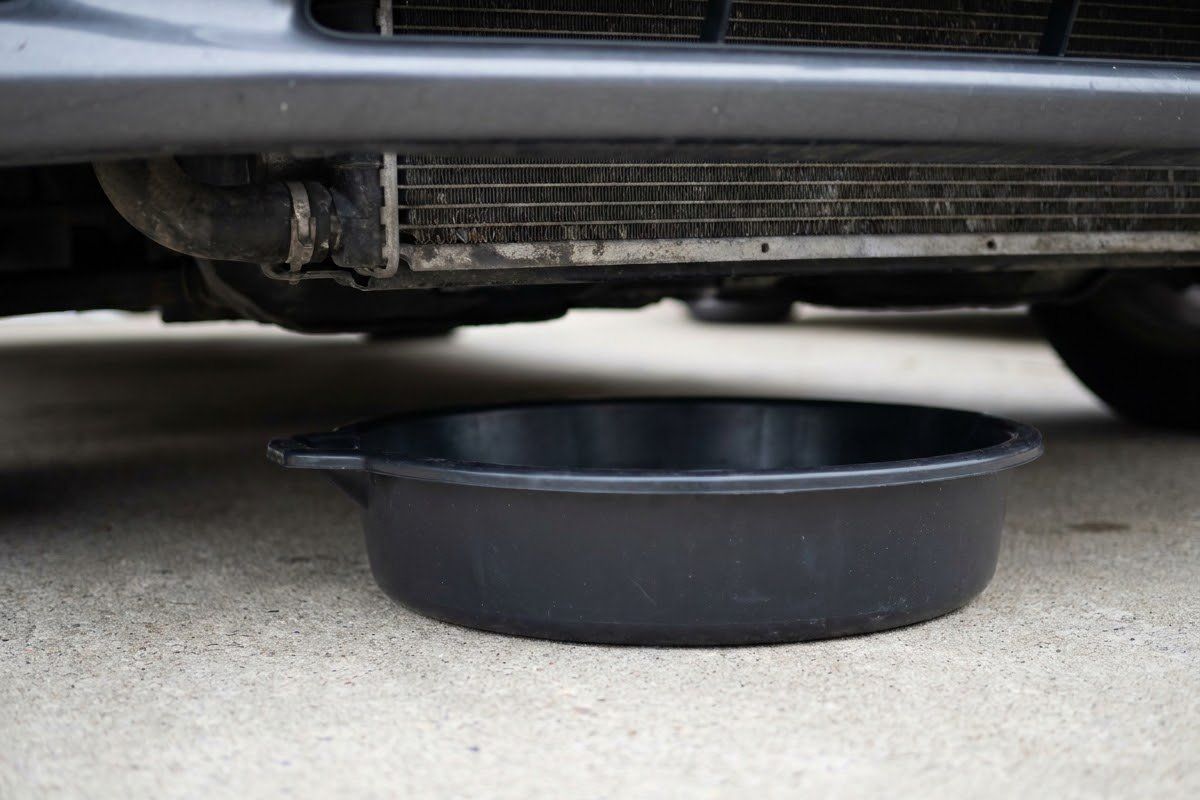
- Drain the cooling system following your owner’s manual for the drain procedure, with the engine and radiator cool. Catch the fluid in a pan.
- Flush the system only by the method your manual allows.
- Fill with the specified coolant. For concentrate, mix it as the label and your manual direct, using only the water type the manual allows (one automaker’s manual says deionized or soft water, never hard water). A pre-mixed product does not need water.
- Cap and check. Make sure the cap is fully closed, and check the level when the engine is cool, between the reservoir’s MIN and MAX marks. Recheck the level over the next few days and have a shop look for leaks if it keeps dropping.
Bleeding air
Some cars trap air in the cooling system after a refill and need a bleeding procedure. The sources we cite do not describe it, so we cannot give steps. Your owner’s manual tells you whether your car needs it and how. If the manual calls for a special tool, a bleed screw you cannot reach or a scan-tool step, use a shop.
Capture and dispose of old coolant
Collect the old coolant in a clean, sealable container. EPA lists antifreeze among household hazardous waste examples that require special care in disposal and says to check with your local waste management agency; it suggests looking for special collection events or permanent collection centers. Do not pour it down a drain or on the ground.
Mixing: premix versus concentrate
Concentrate has to be mixed with water before use, using the ratio and water type your manual and the label give. One automaker’s manual says not to use a solution of more than 60% or less than 35% antifreeze. A pre-mixed product is ready to use. Read the label and follow the manual; our page on antifreeze versus coolant explains the terms.
When to use a shop
Use a shop if you cannot drain or refill safely, the manual calls for special tools or bleeding steps you cannot do, the car is a hybrid or has an electric water pump, a drain or hose fitting is stripped or seized, the level keeps dropping after a refill, or the engine overheats. This guide is for gasoline passenger cars; diesel differs, so see your manual.
Quick answers
How long does a coolant flush take?
The sources we use give no standard time, and it varies by car, drain method and how long the engine needs to cool. Plan for a cool engine, a clear workspace and time to handle the old fluid carefully. If your manual calls for bleeding air or special tools and you are unsure, use a shop rather than rush the job.
Can I just drain and refill instead of a full flush?
Your owner's manual says which procedure your car needs and how to drain it. A drain alone may leave part of the old coolant in the system. Follow the manual's drain method and refill with the specified type. If the manual describes only a drain and refill, follow that.
What if I mix the wrong coolant?
Do not drive far. Mixing is acceptable only if your manual or the label says the product is compatible. If you are unsure what went in, have a shop check and, if needed, flush the system. Keep the label of what you added so the shop knows.
Do I need distilled water?
When you mix concentrate, use the water your manual allows. One automaker's manual says to use only deionized or soft water and never hard water. A pre-mixed product needs no water. Check the label and your manual, and do not guess a ratio.
Can I do this on a warm engine?
No. One automaker's manual says never to remove the radiator cap while the engine is operating or hot, because scalding coolant and steam may blow out under pressure. Let the engine cool completely, and do not loosen the cap or a drain until you are sure the system is cool.
What do I do with the old coolant?
Catch it in a clean, sealable container and treat it as household hazardous waste. EPA lists antifreeze among its examples, says these products require special care, and suggests special collection events or permanent collection centers in your community; check with your local waste management agency first. Do not pour it down a drain, and keep children away.
Where we got this
- Kia owner's manual: Engine coolant (ownersmanual.kia.com)
- Kia owner's manual: Removing the radiator cap and checking the coolant level (ownersmanual.kia.com)
- ATSDR: Ethylene Glycol ToxFAQs (atsdr.cdc.gov)
- EPA: How Do I Recycle Common Recyclables (epa.gov)
Further guides
- Engine Coolant (Antifreeze) Guide: Types, Colors, Safety
What engine coolant does, how it relates to antifreeze, why the manual's type beats color, hot-system safety, toxicity, disposal and when to see a shop.
- Coolant Types and Colors: OAT, HOAT, IAT and Why Color Misleads
Coolant types and colors explained: IAT, OAT and HOAT labels, why not to choose by dye color, matching your manual's specification and why not to mix.
- Is Coolant the Same as Antifreeze?
Is coolant the same as antifreeze? Mostly yes: antifreeze is often the concentrate, coolant the mixed fluid in your car. Mix, safety, disposal.