What Size Battery Does My Car Need? Group Size Explained
Posted by DIYCar Editorial Team Reviewed by DIYCar Editorial Team Review date Posted Topic: Battery
The battery your car needs is the one your owner's manual specifies. A BCI group size sets a battery's voltage, maximum dimensions and terminal layout, so it decides whether a battery fits the tray and cables. Match the group size, the chemistry (flooded, EFB or AGM) and the cold cranking rating to the manual, and check the old battery's label.
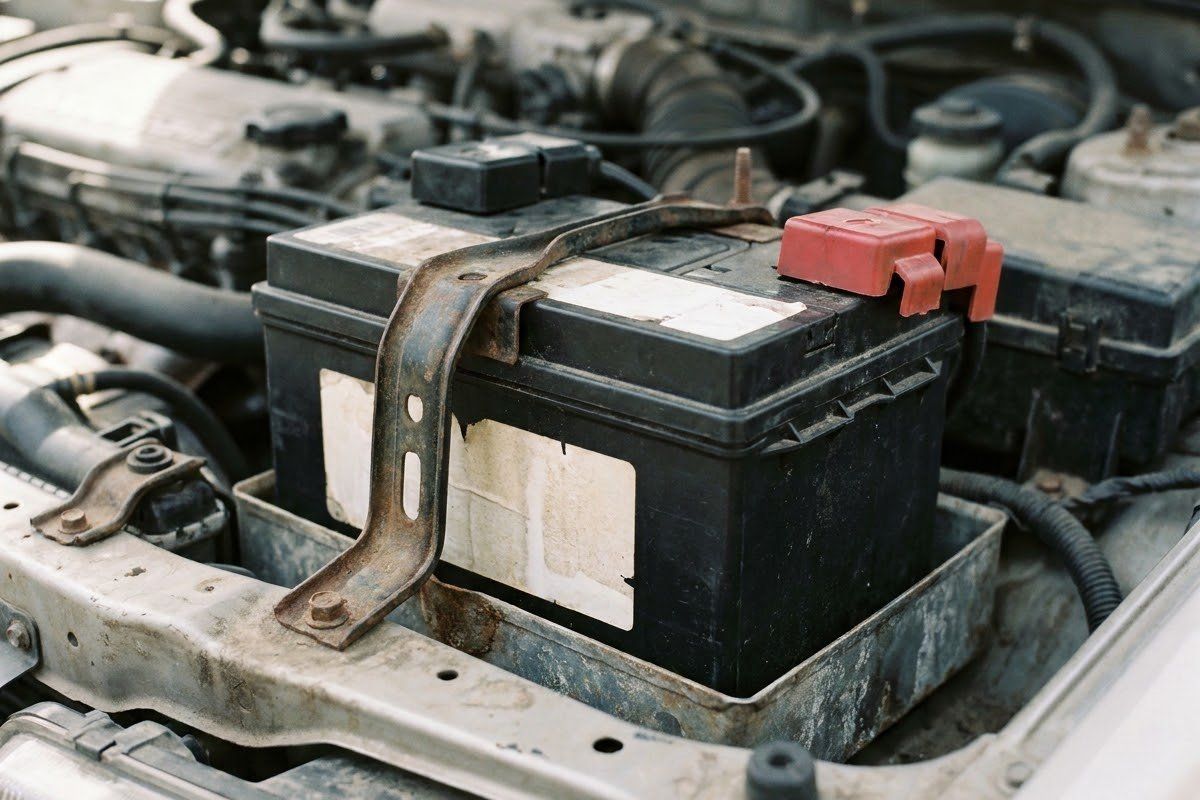
Section of: How to Replace a Car Battery Safely, Step by Step
Buying a battery by guesswork is how people end up with cables that do not reach. The right battery is the one your owner’s manual lists, and the group size is the label that tells a seller what fits. This page explains what that label covers. It supports our battery replacement guide and sits next to the pages on cold cranking amps and battery types.
What a group size is
A BCI group size is a standard number that defines a battery’s voltage, maximum overall dimensions and terminal arrangement. Battery Council International (BCI) says batteries are classified into numbered group sizes according to their voltage and maximum overall dimensions. Batteries in a group must be the same physical size, within 2 mm, so any battery of the right group should fit the tray and hold-down.
BCI lists four characteristics:
- Physical size, which decides whether the battery fits the tray and under the hood.
- Performance, measured in cold cranking amps or amp hours.
- Terminal position, which ensures the vehicle’s electrical cables align with the battery.
- Chemistry, with lead-flooded as the default and EFB or AGM marked as variants.
BCI assumes lead-flooded technology by default. Higher-performance variants get designations such as EFB and AGM, so a group number alone does not tell you the type.
Where to find the number for your car
- The owner’s manual. The specifications section lists the battery requirements for your engine and model. This is the authority, and it is the first place to look.
- The label on the current battery. A group number is often printed there. Treat it as a clue rather than proof: the battery in your car may not be the original.
- The seller’s fitment lookup. BCI says retailers cross-reference the BCI group size when replacing a battery, and it points to its own vehicle battery replacement data as a database that assigns the proper group sizes. Give the seller your year, make, model and engine, then check the answer against the manual.
- A shop. If the manual is missing or your car has a hybrid or stop-start system, ask.
What to match besides size
- Chemistry. If the manual specifies AGM or EFB, buy that type. The types guide explains the difference.
- Terminal position. A battery with its posts reversed can leave a cable too short. Compare the old battery with the new one before you leave the shop.
- Cold cranking rating. Read it from the manual and compare it with the label. The CCA page explains what the rating means.
- Hold-down and tray. The battery should sit square and be secured. Do not run a car with a loose battery.
Checklist before you buy
- Write down the manual’s battery specification, not just the group number.
- Photograph the old battery’s label and terminal layout.
- Note any stop-start or hybrid badge in the manual’s battery section.
- Ask the seller whether a core return is required and whether the car needs a reset after fitting.
- Ask a shop if the battery is under a seat or in the trunk, since that changes the install.
Safety when you swap it
A battery holds acid and can give off explosive gas, so wear eye protection and keep sparks away. The replacement guide walks through the job, and DIY car safety basics covers general rules. If a car will not start, you may only need a jump start, but a dead battery that is the wrong size is a fitment problem, not a charge problem.
When to ask a professional
- The manual does not list a battery size, or you cannot find a manual.
- The battery is in the trunk, under a seat or in a sealed compartment.
- The car has a hybrid system or stop-start and the manual calls for registration after replacement.
- The old battery is cracked, swollen or leaking.
This guide is for gasoline passenger cars. Diesel vehicles differ; see your manual.
Quick answers
Where do I find my car's battery group size?
Start with the owner's manual, which lists the battery specification for your vehicle. The label on the existing battery often shows a group number, but it may not match the original if a past replacement used a different one. BCI says retailers cross-reference the group size by vehicle, so a battery seller can confirm it from your vehicle details.
Can I use a different group size if it fits?
Do not choose a size just because it fits the tray. BCI describes a group size as covering physical size, performance, terminal position and chemistry, so a different one can leave the cables unable to reach or the battery loose. Use the group size and specification in your manual, and ask a seller if you think a substitute is allowed.
Does the group size tell me the CCA?
Not by itself. BCI lists performance, measured in cold cranking amps or amp hours, as its own characteristic of a group size. Different batteries in the same group can carry different ratings. Check the cold cranking amps in your owner's manual, then compare the rating printed on the battery you plan to buy against it.
Does my car need an AGM or EFB battery?
Your owner's manual says. BCI notes that higher-performance designs are labelled EFB or AGM, and a car may be specified for one of them. If the manual names a type, replace it with that type rather than a plain flooded battery. See the types guide for how they differ.
Do I need to register or reset anything after fitting a new battery?
Some modern cars need a reset or registration after a battery change, and only the owner's manual or a shop can say whether yours does. Check the manual's battery section before you disconnect anything, because it may also give cable order and warnings. If it requires a scan tool you do not have, use a shop.
Where we got this
- Battery Council International: BCI group sizes (batterycouncil.org)
Further guides
- How to Replace a Car Battery Safely, Step by Step
Replace a car battery safely: hazards, group size, disconnect and reconnect order, cleaning terminals, recycling the old one and when to see a pro.
- How to Jump-Start a Car Safely
Jump-start a car safely: when not to try it, the cable order automaker manuals give, where the last clamp goes, and when to call for help.
- Car Battery Replacement Cost: What Drives the Price
What decides car battery replacement cost: size, chemistry, labor, return credits and warranty, plus a checklist for comparing quotes. No made-up prices.
- Car Battery Types: AGM vs Flooded vs EFB, Explained
Compare flooded, EFB and AGM car batteries: how each is built, what group size, CCA and reserve capacity mean, and where to find your car's required type.
- How to Charge a Car Battery Safely With a Charger
Charge a car battery safely with a charger: ventilation, clamp order, charger settings, how to tell it is done, and when the battery is beyond saving.